Monday, January 14, 2013

Episode 8: Chef Jessica Christensen, City Tavern, Culver City CA

Chef Christensen preps the duck testicles
Chef Christensen's culinary talent is the blending of a playful and creative methodology with a respect for simple, easily-approachable cuisine with Southern flair - her fried grits are the stuff of legend at Culver City's City Tavern where she spends most of her time. As Director of Culinary Operations over City Tavern and nearby Rush Street, Christensen is a formidable character who knows her way around a large, sharp knife. Like many of the chefs we've worked with, Chef Christensen started in the culinary trenches of Southern California with a variety of jobs, in this case on the front line at the Ritz-Carlton in Laguna Niguel, eventually proving her mettle to helm The Studio at Montage Resort and Spa in Laguna Beach.

Freshly fried duck testes
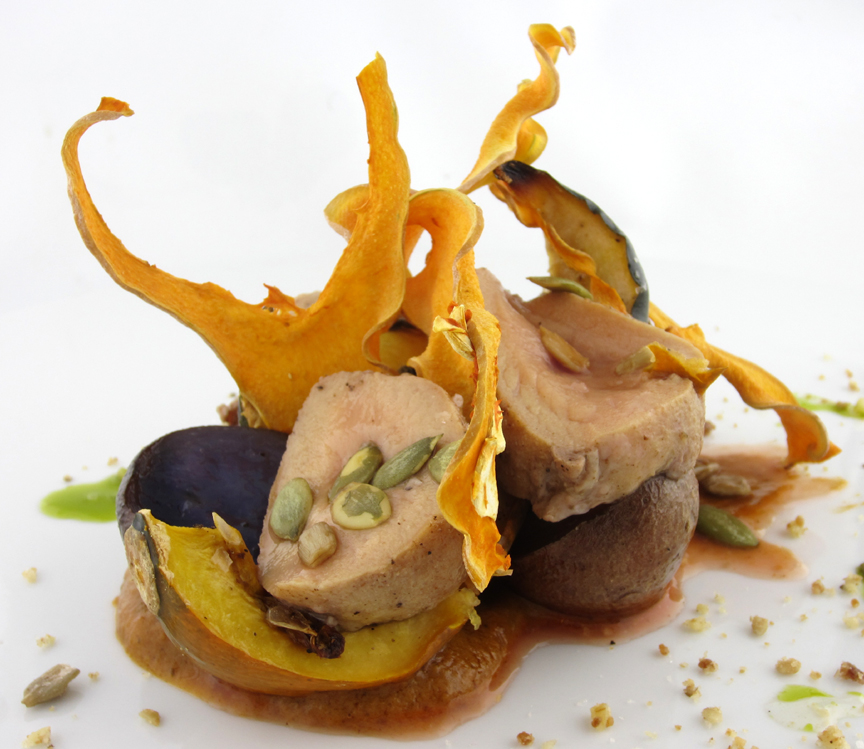
We had no doubt Chef Christensen knew her way around a duck, but suspected she had never had her hands on Daffy and Donald's progeny - once again we were staring down a sack lunch in Kamikaze Kitchen's Episode 8. We presented Christensen with enough duck testicles to make our own flock, and she tore through the kitchen accentuating the fowl balls with a variety of other duck derivatives including duck bacon, duck prosciutto and duck butter (don't ask, just watch). Chef Christensen created a spectacular and colorful dish with simple, basic flavors that didn't step on each other's webbed feet and produced a culinary masterpiece with the duck testicles from ExoticMeatMarket.net that was fun, beautiful and delicious. Christensen shares the recipe here for her unique creation - give it a shot if you've got the balls:

Duck Testicles Southern-Style


  • approx. 1 lb. duck testicles
  • 1 qt. of foie gras duck fat
  • 1 sprig thyme
  1. Rinse the duck testicles in cool water and allow to drain; shake dry in a lint-free towel to remove all outside moisture
  2. Heat the duck and foie gras fat in a large sauce pot with the sprig of thyme; carefully lower the duck testicles into the duck fat when it is just barely warm
  3. Bring to barely to a simmer and monitor the duck testicles until they are firm to the touch (do not allow the fat to boil or you will fry the balls too early)

  • up to ¼ cup of duck fat for sauté
  • 1 ½ cups cornmeal
  • 1 cup flour
  • salt, fresh ground white pepper to taste
  • 1 bunch chopped Italian parsley
  1. Pulse the cornmeal and flour in food processor and reserve
  2. When the duck testicles feel firm (like a sausage), use a skimmer to remove from the duck fat and coat well in the cornmeal and flour mixture
  3. Heat a cast iron skillet over medium high heat and add a little of the duck fat from the confit; pan-fry the testicles until just browned on the outside and slightly crisp.  Season to taste and toss with parsley.

  • 2 lbs. beet greens (washed well)
  • approx. 2 tbsp. duck fat for sauté
  • 1 breast duck bacon, lardon
  • 4 shallots, sliced thin
  • 4 cloves garlic, sliced thin
  • 1 tsp. red chili flake
  • salt and pepper to taste
  • approx. 4 tbsp. preserved lemon, julienned
  • ¼ cup apple cider vinegar
  1. In a large sauté pan, heat the duck fat over medium heat; sauté the lardon, shallots, garlic and then add the beet greens in batches as they wilt (don’t raise the heat too high or the greens will crisp instead of wilting)
  2. Season with chili, salt, pepper and vinegar
  3. Cook until liquid is almost all evaporated


  • beet stems, washed and cut into one inch sticks
  • 2 cups rice wine vinegar
  • 1 cup water
  • 2 bay leaves
  • 1 tsp. black peppercorns
  • 4 cloves
  • 1 tbsp. salt

  1. Heat all of the ingredients except the stems to boiling
  2. Add stems and simmer until stems are just barely tender; allow to cool in pickling liquid


  • 2 qts. whole milk
  • 2 cups yogurt
  • 1 cup heavy cream
  • 2 tsp. salt
  • 1 tbsp. of white vinegar
  • 3 juiced and zested Meyer lemons

  1. Heat milk, yogurt, cream and salt; when milk mixture starts to boil, lower heat and add remaining ingredients
  2. Simmer for about 6 minutes then pour into a coffee filter or cheesecloth suspended over a large bowl (to catch the liquids as they separate)
  3. Allow to drain slowly and do not agitate - the ricotta is good served slightly warm or can be held in the refrigerator for a few days

  • 1 cup yellow cornmeal
  • 1 cup all-purpose flour
  • ¼ cup granulated sugar
  • 1 tbsp. baking powder
  • 1 tsp. salt
  • 1 cup milk
  • 1/3 cup vegetable oil
  • 1 large egg, lightly beaten
  • Duck prosciutto, shaved thin to garnish

  1. Mix the dry ingredients in a large bowl
  2. Mix wet ingredients in a medium bowl
  3. Pour wet ingredients into the dry and mix until batter is all moistened
  4. Pour into the greased baking pan (you can double this and cook it in a cast iron skillet – heat the skillet in the stove while you mix the ingredients and you will get a crisp outer skin to the cornbread); you can also use a greased 13x9 inch baking pan
  5. Cook at 400 degrees for 25 minutes
  6. Allow to cool for 10 minutes in the pan and then flip onto a cooling rack 

Follow Chef Jessica Christensen on Twitter at @jkachristensen, and on Facebook at /Jessica A. Christensen
Follow City Tavern on Twitter at @CityTavernCC, on Facebook at /City Tavern - Culver City and on the web at http://citytavernculvercity.com/

Monday, December 31, 2012

Episode 7: Chef Alfonso Galan, redwhite+bluezz, Pasadena CA

Chef Alfonso "Fonz" Galan has his heart in his hand
Chef Galan was brought to Kamikaze Kitchen's attention as whiz-kid who can cook anything. Having only been in the United States for 8 years, Galan has risen through the ranks in a short period of time - after graduating at the top of his class at le Cordon Bleu School of Culinary Arts, he has served in the capacity of line cook all the way up to Executive Chef at a variety of establishments including the Peninsula Hotel's Belvedere Restaurant, The Kitchen for Exploring Foods (Pasadena), Bistro 45, Madeleine’s Restaurant Wine and Bistro and Church and State Bistro. He calls Pasadena's redwhite+bluezz home, which is where we caught up to the versatile sous chef for Episode 7 of Kamikaze Kitchen.


The heart of the matter - llama, to be exact
Chef Galan was challenged to make something edible of a llama heart procured through ExoticMeatMarket.net, and we're proud to say that his skills were worthy of his reputation. As the heart is one of the hardest working muscles in the body, Galan's quest was to render it into a dish that maintained the organ's unique flavor yet not requiring lengthy chewing like llamas on the grasses of the Argentine pampas. His dish (a variation on a bourguignon), passed with flying colors. His recipe is printed below should you wish to try to prove the adage that way to a llama's heart is through your stomach:


Llama Heart Bourguignon


  • 2 llama hearts
  • 1/2 # slab of bacon
  • 3 carrots
  • 1 bunch of celery
  • 1 onion
  • 4 cups red wine
  • 4 sprigs of thyme
  • 3 sage leaves
  • 2 sprigs of rosemary
  • 5 cloves of garlic
  • 3 tablespoons of tomato paste
  • 1/2 cup water
  • Parsley for garnish
  • Salt and pepper
  1. Chop the celery, onion, and carrots
  2. Cut the llama heart and bacon into 1 inch cubes
  3. Place the meat into a roasting pan and add the mirepoix, aromatics, garlic, tomato paste, red wine and water
  4. Braised for 1 1/2 to 2 hours
  5. Serve with roasted potatoes and a French baguette
Follow Chef Alfonso Galan on Twitter at @fonz090965, and on Facebook at /Alfonso Fonz Galan
Follow redwhite+bluezz on Twitter at @redwhitebluezz, on Facebook at /RedWhiteBluezz and on the web at http://www.redwhitebluezz.com/

Wednesday, December 12, 2012

Episode 6: Chef Juan Mondragon, Juan's Restaurante, Baldwin Park CA

Chef Mondragon prepares iguana birria
Chef Juan Mondragon was introduced to us by friend and Mexican culture afficionado Chuy Nomas, who raved about Mondragon's expertise in the pre-Hispanic cuisine of Mexico and extensive knowledge of the health benefits of many of the dishes and ingedients used by the indiginous people. Val's penchant for wearing dragon shirts seemed particularly appropriate for Kamikaze Kitchen's Episode 6, as Chef Mondragon's surname is French for "my dragon", although Mondragon only appeared to breathe fire at the end of his encounter with Kamikaze Kitchen. Mondragon was born in Mexico City and raised on a farm, where he learned to cook at a very young age in his grandmother's kitchen, using locally grown and raised ingredients (including nopales, tunas (cactus pears), cocoa and a variety of seeds such as pumpkin, chia and pine nuts).

Cut pieces of iguana and a shot of iguana blood
Mondragon is famous for his hand-crafted moles made in the style of the state of Guerrero; he uses 17 different types of chiles and utilizes recipes passed down to him by his grandmother. Having studied culinary arts at Gastronomico Chefuri Culinary Institute in Mexico City, Chef Mondragon was discovered by Ryan Seacrest, having served as Seacrest's personal chef for several years, as well as preparing food for celebrities such as Martha Stewart, Oprah Winfrey, Iron Chef Chairman Mark Dacascos, Sofia Vergara, and Raul de Molina.


Chef Mondragon shows what he's done with the mystery ingredient
Chef Mondragon recognized our ingredient immediately, having eaten iguana many times growing up; although he decided to use one or more of his grandmother Leonor Arellano's recipies, he had never cooked the reptile before (a fact made obvious by his reaction to the skinned and gutted creature lurking at the bottom of the mystery bag). With only a single iguana in tow from ExoticMeatMarket.net, Mondragon opted to alter two recipies - one with mole, and the other a birria. Mondragon is bursting with pride when he describes the joy of sharing the culinary delights from his childhood, and hopefully you will be able to use the following variation of his grandmother's recipe to make a tradition of your own:

Iguana Birria (Stew)


  • 1 whole, skinned and gutted iguana
  • 10 garlic cloves
  • 1 tsp. oregano (dry)
  • 1/2 tsp. ground cumin
  • 4 whole cloves
  • 4 bay leaves
  • 4 whole peppercorns
  • 1 whole onion
  • juice of 1 orange
  • 1 1/2 lbs of chile guajillo
  • salt to taste
  1. To a liter of water, add 2 teaspoons of vinegar and the juice of one whole lime
  2. Allow the water and ingredients sit for 15 to 20 minutes, and then wash the iguana thoroughly
  3. Cut the iguana into pieces of desired size
  4. Toast the garlic, cloves, bay leaves, onion and chile guajillo (the chiles can be boiled if preferred)
  5. Blend all ingredients together
  6. Heat very little oil (preferably grapeseed or cold-pressed EVO) in a sauce pan on low heat
  7. Add blended ingredients to the sauce pan
  8. Add the iguana pieces and keep on low heat
  9. Stir all ingredients every 5 minutes; do not allow the sauce to over-thicken
Iguana should be ready in 1 to 1 1/2 hours (check it after an hour)


Follow Chef Juan Mondragon on Twitter at @Chef_Mondragon, and on Facebook at /Juan Mondragon
Follow Juan's Restaurante on Twitter at @juansrestaurant, on Facebook at /Juan's Restaurante and on the web at http://juansrestaurante.net

Episode 5: Chef Kevin Meehan, Kali Dining

Raw bison testicles
New Yorker Chef Kevin Meehan hit the road right out of culinary school, taking a position in a highly acclaimed restaurant in Belgium where he learned the ropes. On his return to the States, Meehan did time in such prestigious eateries as Mirabelle, L’Orangerie, Bastide, and did a stint as a chef for the illustrious Patina Group. While serving as Executive Chef at Los Angeles' Café Pinot, Chef Meehan participated on Food Network's “Extreme Chef” where he emerged victorious in a western-themed challenge where one of the tasks was to prepare a dish using rattlesnake.

Meehan regularly visits Asia, where he discovers exotic new ingredients and techniques and utilizes them in a unique and impressive display of culinary skill. Chef Meehan is a hunter and forager, gathering many of the ingredients he uses in his imaginative dishes. His current project is a pop-up dinner experience called Kali Dining, where a small number of guests assemble for dinner in an intimate setting, typically in someone's home. A bit of a renegade, Meehan occasionally finds a way around the recent ban on foie gras in California (offering the delicacy free of charge with his dinners). In addition to Kali Dining, Meehan has recently employed his experience with pop-ups to participate in the resurrection of Los Angeles' legendary Test Kitchen.

Chef Kevin Meehan with Kamikaze Kitchen outside a super-secret Kali Dining location
Chef Meehan is a formidable character with a wry sense of humor, and we knew that he would have no qualms about getting his hands around a pair of bison testicles for Kamikaze Kitchen's Episode 5. We had no idea what to expect, but were ecstatic when Meehan presented us with several dishes, including one that features testicle sashimi in an esthetically pleasing and colorful assembly that was surprisingly delicious. As usual, the testicles were sourced from ExoticMeatMarket.net, however, folks that want to try making these dishes at home will need to improvise, as man of intrigue and mystery Meehan ate the recipe for the dishes with spring greens and light bisque.

 Smoked Testicle Sashimi with Onion Tar

Pan-seared Nut-encrusted Testicles

Follow Chef Kevin Meehan on Facebook at /Kevin Meehan
Follow Kali Dining on Twitter at @kalidining, on Facebook at /Kali Dining and on the web at http://www.kalidining.com
 

Episode 4: Chef Brendan Collins, Waterloo and City, Culver City CA

Chef Brendan Collins removes the meat from the lamb's skull
Our chef of choice for Kamikaze Kitchen Episode 4, British expatriate Chef Brendan Collins is one of the hardest working chefs in the Los Angeles area, and although he means business in the kitchen, he's also the kind of guy you'd want to down a few pints with and have a round or two of darts. Chef Collins designed the menu at Waterloo and City in tribute to simple, workingman's fare, but with an artistic flair and focus on hearty dishes using what traditionally would be called "utility cuts". From the rich, earthy blood cake to the masterpiece King's Platter of charcuterie, Collins' prowess with nose-to-tail gastropub fare is the stuff of legends, and we knew going in that Chef Collins would be able to bat out of the park any pitch we threw at him.

The lamb's head prior to cooking
Collins, a native of Nottingham, England, landed a spot at two-star Michelin restaurant, Le Gravroche, by age 17. Having mastered his craft in the UK, Chef Collins jumped the pond in 2002 to serve as chef de cuisine at Melisse Restaurant in Santa Monica at the request of Chef Josiah Citrin. Under his watch, Melisse received at the Mobile Four Star Rating and was one of the first California restaurants to receive a Michelin two star rating. Collins developed Orange County's Mesa Restaurant, Anisette in Santa Monica, and The Hall at Palihouse before opening Waterloo & City and serving as Executive Chef; he splits his time officiating between Waterloo and City (named after a London Tube station) and Larry's in Venice Beach.

It should have occurred to us that a chef that knows meat inside and out the way Collins does would know exactly what to do with a skinned lamb's head - using a range of techniques (which included an electric Skil saw), Chef Collins used every bit of real estate on the beast's head in a dish that included lamb brain ravioli with pea puree, chunks of savory face meat and braised tongue. The lamb's head was sourced from ExoticMeatMarket.net and a recipe for the dish is forthcoming.

 Pea Brain Ravioli


Follow Chef Brendan Collins on Twitter at @ChefBrendanC, and on Facebook at /Brendan Collins
Follow Waterloo and City on Twitter at @WaterlooandCity, on Facebook at /Waterloo and City and on the web at http://www.waterlooandcity.com/

Tuesday, October 23, 2012

Episode 3: Chef Jet Tila, The Charleston, Santa Monica CA


Chef Jet Tila's toothpaste commercial
Chef Jet Tila was the ideal candidate for a mystery ingredient that would have sent weaker chefs screaming and running for the door; his bigger than life persona convinced us that he was the right person to take on our biggest (literally) challenge to date in Kamikaze Kitchen's Episode 3. Chef Tila takes command of every situation he's in, and Episode 3 of Kamikaze Kitchen was no exception - armed with his knife-laden mini-coffin, Tila addressed the situation with skill, strength and science. Of course, Chef Tila is no stranger to challenges on a gargantuan scale - in addition to breaking world's records for the longest California roll at (at an impressive 442 feet) and a record for the largest stir fry (1,085 pounds in a single wok), he recently took the Guinness crown for a 6,658 pound fish stew at UMass Amherst (using the same pan as the one used for the stir fry).

Tila cut his teeth as a boy working in the renowned Bangkok Market and Royal Thai restaurant in L.A.'s Thai Town, further honing his skills at Le Cordon Bleu and California Sushi Academy. In addition to appearing on No Reservations with Anthony Bourdain, Chef Tila has also regularly appeared on NPR and the Food Network, as well as clashing blades with legendary chef Masaharu Morimoto on Iron Chef America. Tila has written regular columns for The Los Angeles Times and Las Vegas Weekly, is a frequent guest on KCRW's Good Food with Evan Kleiman and is the host of KLAA's radio program, The SoCal Restaurant Show.
Making Chef Tila an offer he can't re
Chef Tila's reputation led him to be chosen to helm Wazuzu at Wynn Las Vegas’ Encore casino in Las Vegas, where he served as Executive Chef from 2008 through 2011, a stint that earned the restaurant a place on Condé Nast Traveler’s “Hot List Tables” list. In 2011, he returned to Los Angeles to partner with Chef Alex Ageneau on the innovative BistroNominics fine dining pop-up. He recently became owner and Executive Chef of The Charleston in Santa Monica, California a night spot, drinking and dining establishment that exudes a classy 1920s vibe, which is where Kamikaze Kitchen caught up with him to do a little contract work and accept an offer he couldn't refuse. Chef Tila quickly dispatched of our victim and transformed an alligator's head into a variation of The Charleston's signature dish which he simply calls, "Gator and Waffles". If you feel so inclined to acquire an alligator's head from ExoticMeatMarket.net and attempt Chef Tila's creation, a recipe is provided here:

The assembled Gator and Waffles

Gator and Waffles

Chicken-fried Alligator
  • 1/2 gallon buttermilk
  • 2 qts. water
  • 1/2 cup Kosher salt
  • 2 cups all-purpose flour
  • Cajun or crab boil spices
  • 1 gallon oil (grape seed or peanut)
  1. Using a sharp knife, pull as much meat as possible off the alligator's head in pieces about the size of two fingers; if you find a bullet, set it aside as a conversation piece
  2. Heat the water until boiling and then add the salt; when the salt is dissolved, remove from heat and refrigerate
  3. Add the pieces of alligator meat to the cold salt water, making sure the meat is completely submerged; refrigerate for 1 hour
  4. Pour off the brine and rinse the container, placing the meat back in afterwards
  5. Add enough buttermilk to cover the meat and refrigerate overnight
  6. Drain off and replace the buttermilk and refrigerate for at least another 2 hours
  7. Combine flour and your choice of spices in a large bowl
  8. Heat the fryer or large skillet to 350°
  9. Dredge the meat through the flour until evenly coated
  10. Add the meat to the oil and fry until brown color is achieved; remove and drain on a rack

Waffles

  • 2 eggs
  • 2 cups all-purpose flour
  • 1 3/4 cups milk
  • 1/2 cup vegetable oil
  • 1 tbs. sugar
  • 4 tsp. baking powder
  • 1/4 tsp. Kosher salt
  1. Combine all ingredients and blend until evenly mixed.
  2. Coat hot waffle iron with non-stick cooking spray
  3. Pour or ladle waffle batter evenly onto hot waffle iron and cook until golden brown

Assembling the Dish:

  1. Stack the alligator fingers upright on the waffle
  2. Garnish with chopped red onion and chiles, top with cilantro
  3. Serve with small cup of maple syrup with swirl of Sriracha
Follow The Charleston on Twitter at and on Facebook at /TheCharlestonLA
Follow Chef Jet Tila on Twitter at on Facebook at /chefjettila
and on the web at http://charlestonla.com/

Tuesday, October 9, 2012

Episode 2: Chef Kyle Schutte, 54Twenty, Hollywood CA

Chef Kyle Schutte vacuum seals some of the ingredients for his peacock dish
In Episode 2 of  Kamikaze Kitchen, we brought to Chef Kyle Schutte at 54Twenty what we thought was a collection of unusual ingredients that would have him baffled and bemused. Our desire to work with Chef Schutte stemed from experiencing his innovative work utilizing molecular gastronomy while he served as the Executive Chef at the former Vū Restaurant in Marina del Rey, California. Modest and highly personable, Chef Schutte seems to only be limited by his imagination; he rarely follows others and eagerly shares his technique. It is not uncommon to see him waiting and bussing tables, asking patrons for their opinion on the cuisine. Kyle has only been in the Los Angeles area a few years; his foray into the culinary arts began in May of 2004 with an entry level position at the Tuscarora Mill restaurant in Leesburg, Virginia, which frequently made Washington D.C.'s annual top 100 list.

Having begged forgiveness for the pizza fiasco

He continued his education at the Art Institute in Atlanta, Georgia, graduating early with President's List honors. While in Atlanta, Chef Schutte worked under the guidance of Executive Chef and Iron Chef America / Top Chef participant Richard Blais and Chef Tom Harvey; as recognition of his skills, he was quickly promoted to Sous Chef at the age of 24. In 2009, he was the first chef in North Carolina to utilize cutting-edge molecular gastronomy techniques, including the use of liquid nitrogen.

Shortly after his arrival on the Los Angels area, Chef Schutte was tagged as one of the city's top young chefs to watch in 2011 by Angeleno Magazine and was honored with one of LA's top five pork dishes on Grubstreet. During his tenure at Vū, the restaurant was named one of L.A.'s top 10 hotel restaurants by the Huffington Post.

Chef Schutte's most recent venture has been fast-tracking the former Angel's Diner in Hollywood into the 21st century with a unique take on not-so-typical diner fare at 54Twenty. It was an extreme pleasure working with Chef Schutte, having been floored by his engineering of peacock organ meats into a spectacular dish whose ingredients were barely recognizeable. Chef Schutte presents his elaborate recipe for the epic dish here for your creative enjoyment - good luck! The episode's mystery ingredient can be purchased from ExoticMeatMarket.net:
The assembled peacock liver, heart and tongue dish
Peacock Hearts, Liver and Tongue

Root Beer Spiked Peacock Hearts:
  • 2 peacock hearts
  • 2 g. root beer spice
    • 5 g. file powder
    • 1 g. finely ground star anise
    • 2.5 g. finely ground fennel seed
    • 0.8 g. ground black pepper
    • 3 g. finely ground juniper berries
    • 4 vanilla beans (seeds scraped out)
    • 0.5 g. dehydrated, finely minced spearmint leaves
    • 2.3 g. black tea
  • 4 g. finely ground orange peel
  • .5 g Kosher salt
  1. Preheat a circulator water bath to 62.8°C (145°F); while the water bath comes to temperature, season the peacock hearts with salt and add the root beer spice.
  2. Transfer seasoned hearts into a vacuum bag and seal on full vacuum.
  3. When the bath comes to temperature, cook the vacuumed sealed hearts for one hour.
  4. Remove hearts from the water bath and allow them to rest at room temperature for 10 minutes.
  5. Transfer the hearts (still in the vacuum bag) into a deep container and run them under cold water until they reach an internal temperature below 4. 5°C (40°F).
  6. When the hearts have chilled, remove them from the bag.
  7. With a sharp knife remove the valve end of the hearts and discard; reserve the rest of the hearts for plating.
Peacock Livers:
  • 6 peacock livers
  • 100 ml. olive oil
  • 1 g. root beer spice
  • 10 g. thinly-shaved fennel
  • 15 g. thinly-shaved Spanish onion
  • 1 vanilla bean
  • 1 clove thinly-shaved garlic
  • 4 fl. oz. root beer
  • 4 fl. oz. heavy cream
  • 3 sprigs parsley
  1. Sweat the fennel, onion and garlic in a rondeau over medium-low heat; when the onion is translucent, remove everything and reserve.
  2. Place the rondeau over high heat and add the remaining oil.
  3. Just before the oil gets to the smoke point, add the livers and season with salt and pepper.
  4. When the bottom of the livers have caramelized, reduce the heat back to medium-low and flip the livers.
  5. Add the reserved cooked fennel, onions, garlic along with the scraped vanilla bean and root beer spice.
  6. Continue to cook until the livers reach an internal temperature of 62.8°C (145°F) (medium).  Deglaze with the root beer and transfer all contents of the pan into a blender.
  7. Puree the contents of the pan, slowly incorporating the cream and then the parsley.
  8. When the livers have been completely pureed pass them through a fine mesh sieve and reserve all the solids in the sieve.
  9. Transfer the strained mousse into a heat-resistant container and allow to cool under refrigeration.
  10. Using a sharp knife, mince the reserved solids until they are fine enough to cannelle and reserve for plating.
Peacock Tongue:
  • 1 peacock tongue
  • 400 ml. root beer
  • 100 ml. Kosher salt
  1. Set a circulator to 87.8°C (145°F); while the water bath heats, combine root beer and Kosher salt in a mixing bowl and whisk together until salt has completely dissolved.
  2. Add the tongue to the brine in a vacuum bag and seal at 100% vacuum.
  3. When the water bath has come to temperature, cook the contents for 4 hours.
  4. Remove the tongue from the vacuum bag and allow it to rest at room temp for 10 minutes.  Remove the cartilage and bone from the center of the tongue and discard.
  5. Cut the tongue into thin strips and fry in oil heated to 350°F until crispy; reserve for assembly. 
Oak & Vanilla Sponge:
  • 100 g. wine corks
  • 2 vanilla beans (pods scraped)
  • 500 ml. cold water
  • 1 g. Kosher salt
  • 6 sheets gelatin (bronze)
  1. In a small sauce pot, combine corks, scraped vanilla beans, cold water and salt and bring to a simmer over medium heat.
  2. Reduce heat to maintain a very low simmer for 20 minutes.
  3. Remove the pot from the heat and allow the mixture to steep for another 20 minutes before straining.
  4. Chill ½ of the strained oak broth in a freezer, but do not allow it to freeze.
  5. Bloom the gelatin in ice water and bring the other half of the broth back up to a high simmer.
  6. When the broth reaches a simmer, squeeze all the water out of the bloomed gelatin and whisk it into the broth.
  7. Transfer the oak and gelatin mixture to a mixer fitted with a whip attachment and then whip the broth on high speed until it forms stiff peaks.
  8. Continue to whip the gelatin and begin to slowly incorporate the chilled broth.
  9. When all the oak has been mixed together, spread it out onto a lined sheet tray using an offset spatula.
  10. Place the sheet tray in the refrigerator and allow the sponge to completely set.
  11. Remove the sponge from the sheet tray and using a ruler, cut the sponge into 1 cm. Cubes; reserve for assembly.
Celery Root Puree:
  • 2 celery root
  • 1 g. salt
  1. Square off the top and bottom of the celery root bulbs and then, using a sharp knife, remove the skin from the bulb, discarding the skin.
  2. Using a juicer, juice the meat of the celery root, but do not strain.
  3. Combine the celery root juice and salt in a small sauce pot and slowly reduce over low heat by 2/3.
  4. When the celery root takes on the color of caramelized onion and begins to thicken, transfer the reduction into a heat-resistant container and allow to cool under refrigeration; reserve for assembly.
Candied Lemon:
  • 2 lemons
  • 300 ml. Water
  • 300 ml. granulated sugar
  1. Using a citrus zester, zest the lemons in long single strokes from the center of the top to the center of the bottom.
  2. Combine the lemon zest, water and 300 ml. of granulated sugar in a small sauce pot and cook over medium heat until all the sugar is dissolved and the zest is tender.
  3. Strain the zest from the syrup and toss in the remaining 100 g. of sugar.
  4. Place each strip of zest separately on a sheet tray lined with a silpat and bake at 300°F for 10 minutes.  Remove zest from oven and allow to crisp at room temperature; reserve for assembly.
Assembling the Dish:
  1. In a long shallow bowl, swipe a tablespoon of the peacock liver mousse across the center from one end to the other in an even strip.
  2. Slice the hearts on a bias about ½ cm. thick using a sharp knife.
  3. Shingle the heart slices standing up across the center of the plate on top of the mousse.
  4. Alternating sides, place three cannelles of the chopped liver and three cannelles of the celery root puree along the sides of the shingled hearts; fill in any negative space between cannelles with a cube of the oak sponge, trying to place 3 cubes on each side of the hearts.
  5. On top of each cube of oak, place a strip of crispy peacock tongue.
  6. Garnish with six strips of candied lemon and micro celery.
Follow 54Twenty on Twitter at @54_TWENTY and on Facebook at /54Twenty
Follow Chef Kyle Schutte on Twitter at @KyleSchutte2, on Facebook at /Kyle Schutte and on the web at www.kylesstyle.comhttp://www.kylesstyle.com/.